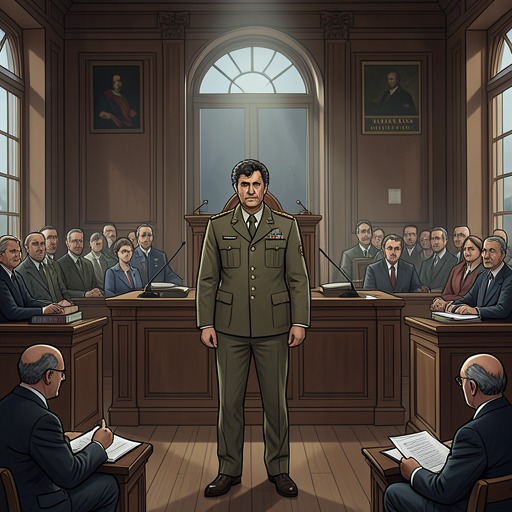
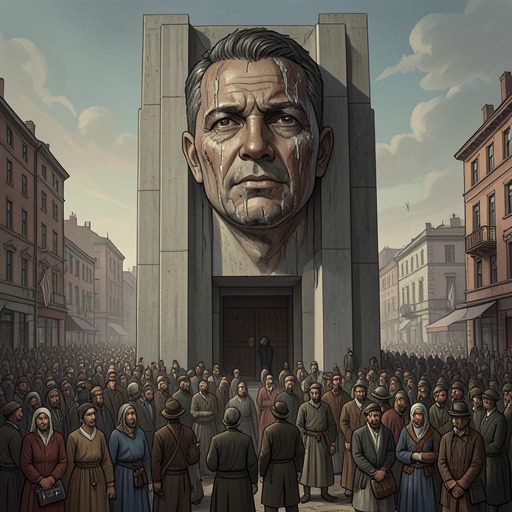
Auschwitz trials of 1963–1965
The Collini CaseThe Auschwitz trials of 1963–1965 serve as a historical measure of how public understanding of Nazi crimes—and the judgments made about them—changed over time. In testimony during the trial of Fabrizio Collini, they mark an early confrontation with the past, while later courtroom arguments expose the distance between that reckoning and the legal closure of the investigation into Hans Meyer.
Historical Turning Point
The expert witness places the Frankfurt Auschwitz trial of 1963–1965 at a turning point in public awareness: it confronted large parts of the population with the full horror of the past for the first time. The account gives the trials significance not only as legal proceedings but as an encounter that altered what people knew and discussed about Nazi crimes.
That change is presented as gradual rather than immediate. The witness says public attitudes shifted more decisively only at the end of the 1970s, when the American television series Holocaust aired in Germany. Between ten and fifteen million people watched and discussed each Monday’s episode. The contrast makes historical judgment time-bound: the witness argues that the lives and judgments of people in the 1950s and 1960s were not the same as those of later generations.
The Trials’ Place in the Meyer Hearing
The reference to the Auschwitz trials arises when Leinen asks whether Hans Meyer’s conduct would be judged differently in the present. The question follows testimony that Meyer’s actions met the criteria for a legitimate shooting of hostages. The expert’s answer distinguishes the legal assessment associated with the earlier period from a later one: given the circumstances of the partisans’ execution, the witness says the Federal Supreme Court would now regard Meyer as an accessory to murder.
This comparison does not erase the earlier legal history. In the hearing, Mattinger emphasizes that the proceedings against Meyer were discontinued, and presents that outcome as leaving Meyer no longer a murderer in the case being tried. Leinen, by contrast, draws attention to the fact that Fabrizio Collini had reported the name of the man responsible for his father’s death, supplied evidence, and trusted the authorities, only to receive notice that the investigation had ended because of a limitation law effective from 1 October 1968. Set beside the changing judgments associated with the Auschwitz trials, that account sharpens the difference between a case being legally closed and responsibility being fully confronted.
Later Legacy
The trials also belong to the novel’s wider account of how Germany revisits the Nazi past. In January 2012, a few months after the novel’s original German publication, the Federal Minister of Justice appointed a committee to reassess the legacy of the Nazi past within the Ministry of Justice. The novel itself became one of the committee’s points of reference.
That later use gives the trials’ place in the narrative a longer reach. They represent an early public confrontation with historical crimes, while the novel’s account of changing judgments and discontinued proceedings keeps open the question of what such confrontation can accomplish—and what remains unresolved when legal procedure has ended.